
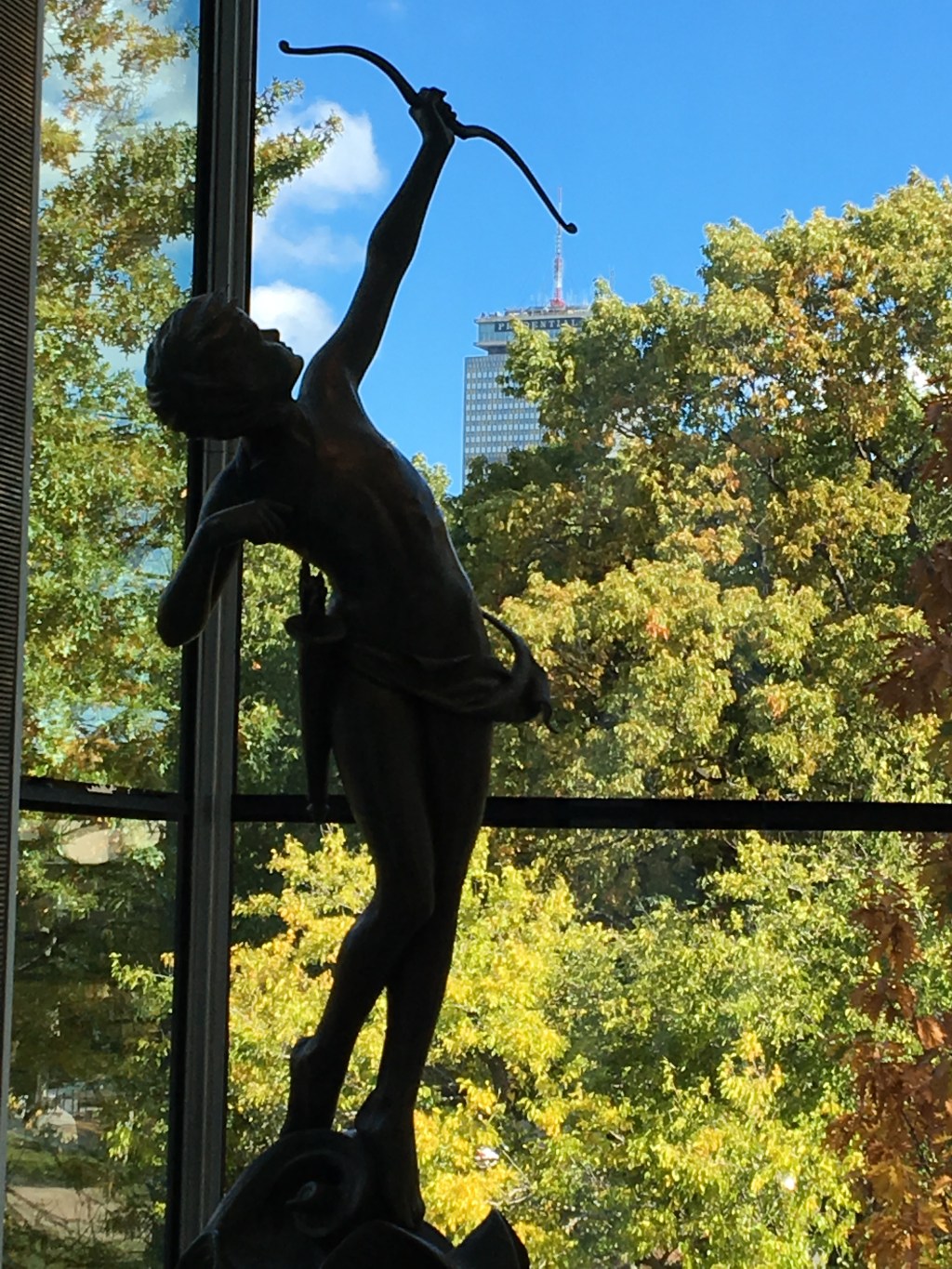
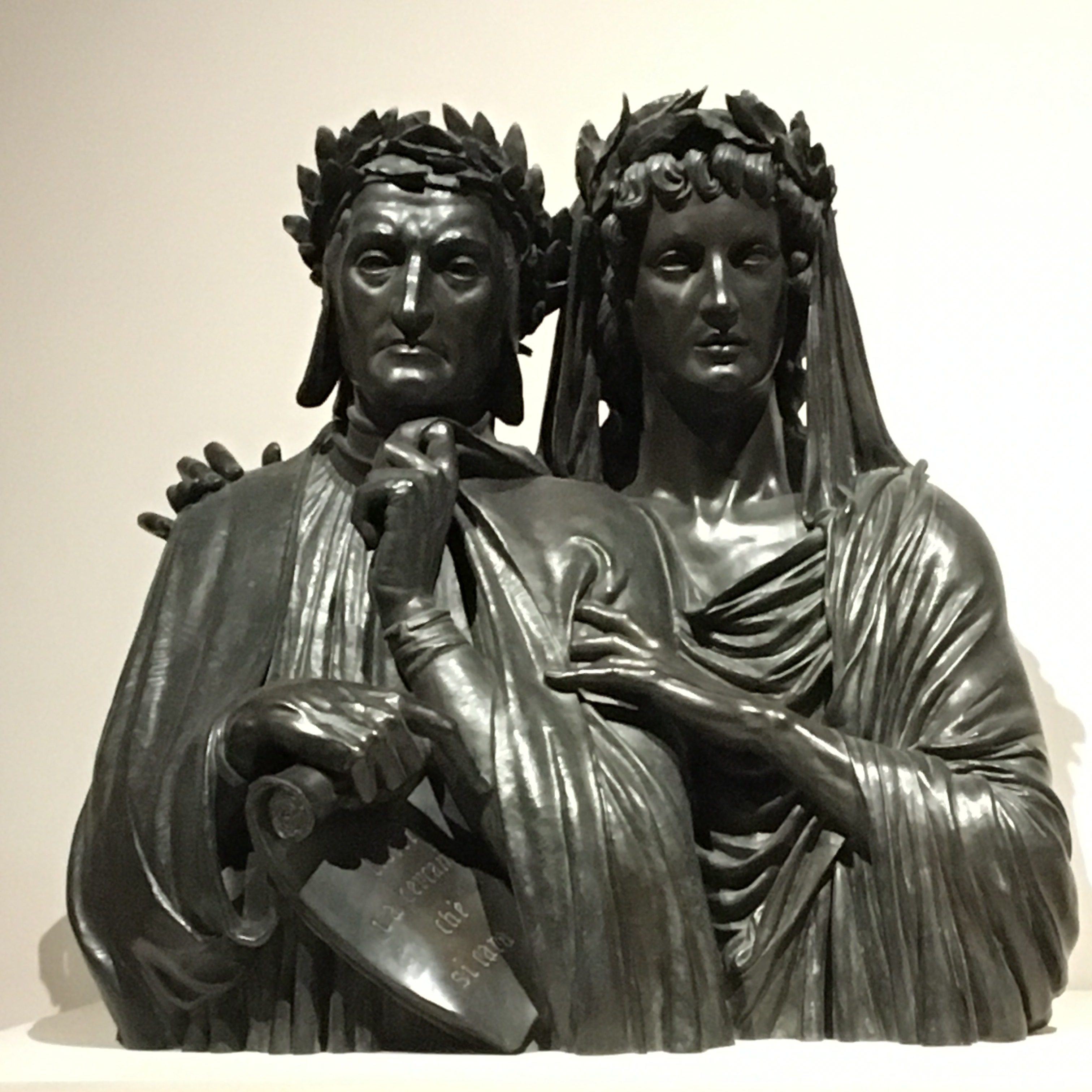
The purpose of this post is to help you to visit, enjoy, and appreciate an art museum. When I mostly retired in 2016, I didn’t have a bucket list. However, I did have one fixed goal, which was to visit every room of Boston’s Museum of Fine Arts. Over the prior decades I had visited the museum many times to see some advertised exhibit or another and, if I had any energy left, I could sample a few more rooms. But I had passed quickly through many other enticing galleries along my way, and the map showed even more that I had never seen. There are over 150 galleries in total. Now that I had a lot of free time, I wanted to make as many visits as it would take to see every one. Why? Well, I have no formal training in art and it certainly doesn’t fit my profile as a science nerd, but all those lightning raids over the years had shown me glimpses of astonishing expressions of the human spirit. Couldn’t I just slow down now and look at them? Yes. Over the next two years, I made 26 visits to the museum. That’s about six rooms per visit. I learned a lot. Allow me to play Virgil to your Dante and show you around.
The campaign
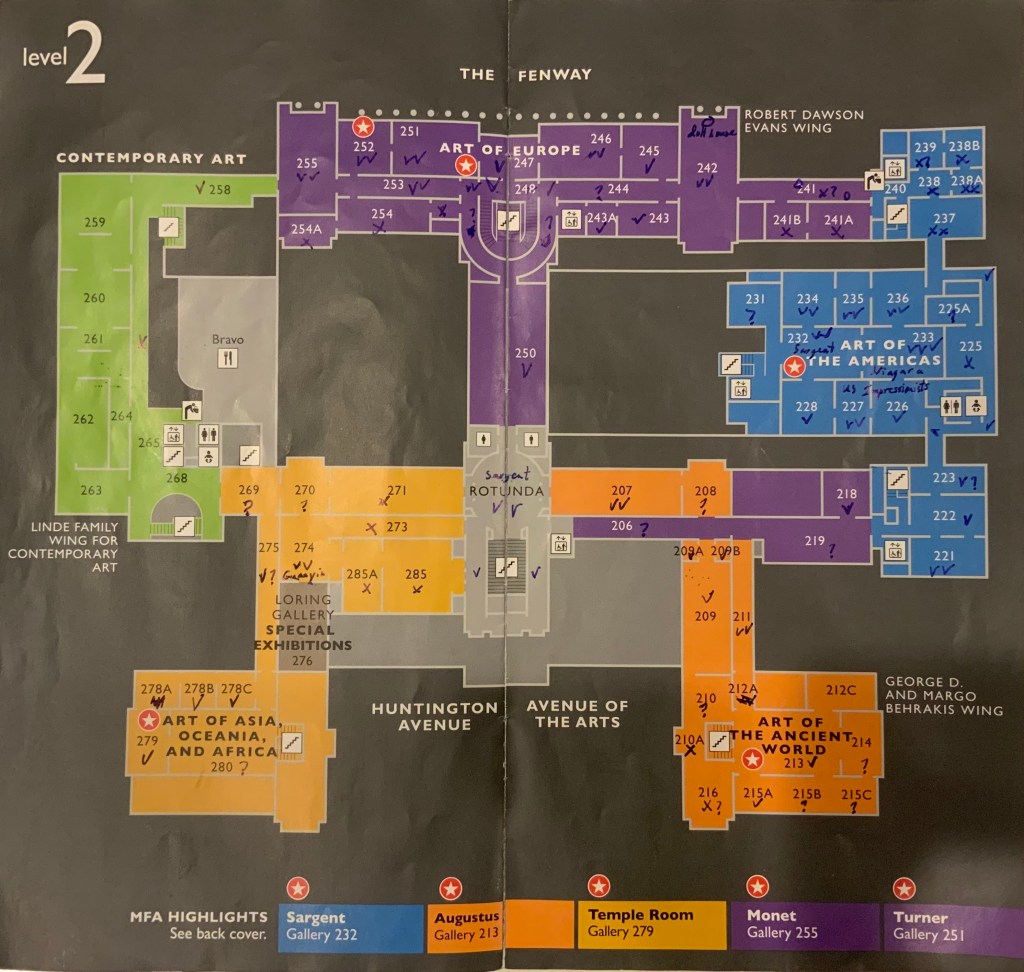
If you have any interest in a museum, I suggest getting a member card at the beginning. It won’t pay off in one visit, but it will entice you to return whenever you think of it or see your card. For example, my wife and I just decided to go again tomorrow. This has saved me a lot of money on admission, lunch, and parking. On my first visit after retirement, I grabbed and kept a map of the floors of the museum. I had a pen with me to check off each room as I saw it. I put multiple check marks on rooms I particularly liked and x’s on rooms I didn’t. Here is one well-worn page. The map still stays in my glove box.
Each visit
My father-in-law, dean of an art school, advised, “always arrive at the museum either when it opens, or 40 minutes before it closes.” Yes. I always leave home at 9:15am to stand with a few ardent comrades as the doors are unlocked at 10. The first hour is very quiet. You get better parking spots that way, too. Parking is expensive, but members pay half.
Each of my visits lasted four to five hours. I’d have stayed a little longer, but traffic out of Boston gets awful after 3pm. Long visits like this require pacing yourself. I’d take a break and sit in some quiet nook every hour or so. Here is an example.
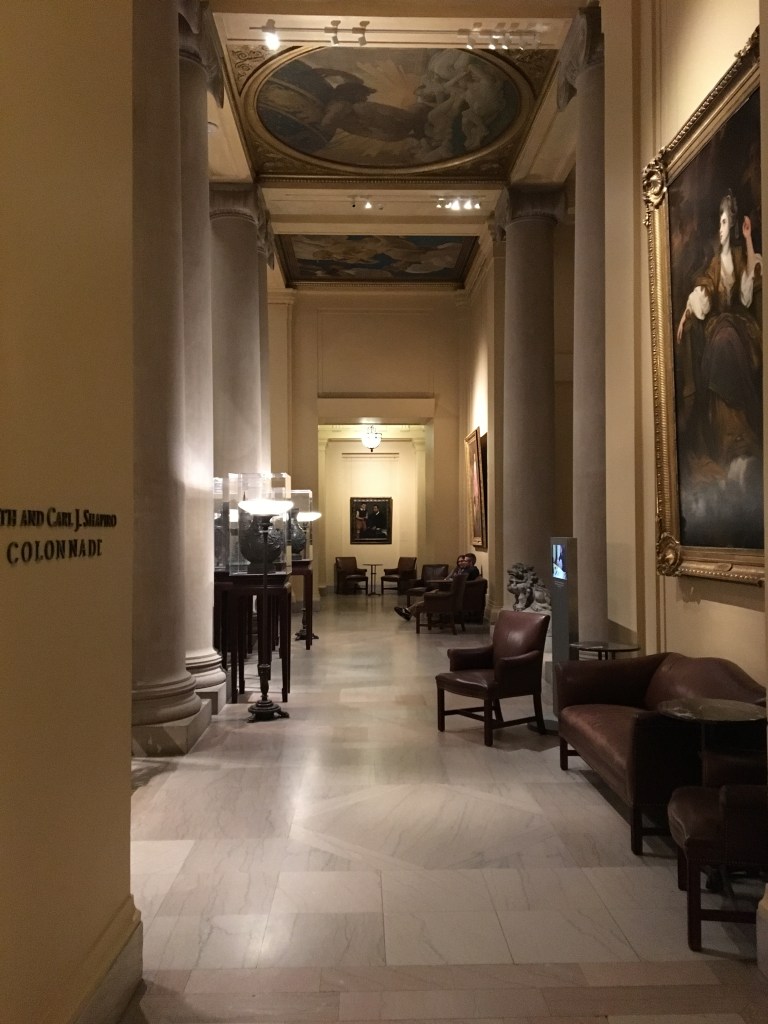
No matter where you rest, there’s art to look at (sometimes on the ceiling). Or you can check your phone, use Wikipedia to learn more about some artist or, if you’ve brought earbuds, just chill out with some Chopin. Drink some water. Visit the bathroom. Soon you’re ready to go again. I generally break at 11, 12 for lunch, and 1:30.
Lunch at the MFA
There are three options for lunch at the MFA but I think the winner is the humble cafeteria in the basement. It’s quick because you serve yourself (soups, sandwiches, burgers pizza, etc.), and the salad bar is excellent. If the weather is good, you can eat outdoors on wrought-iron furniture in the quiet central courtyard surrounded by trees and ivy-covered walls.
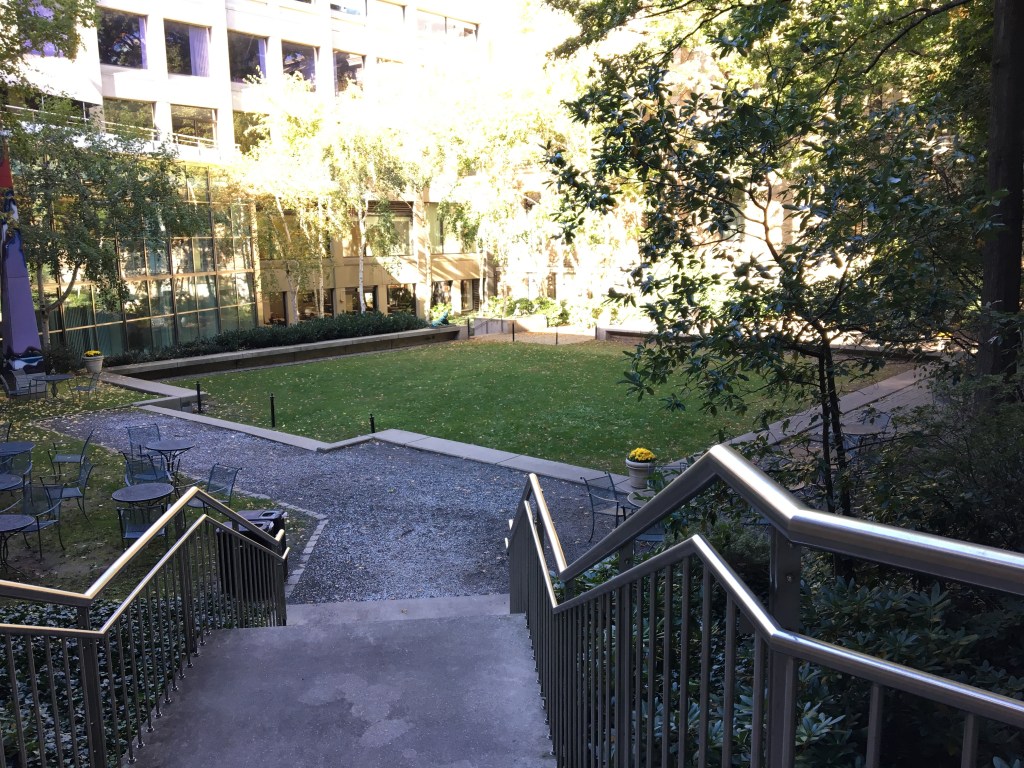
It fills up fast, so get there at noon. Or you might want to arrive later, which gives you an excuse to sit at an indoor table with one or more MFA staff members (easily identified by their badges) and have a fascinating conversation with them.
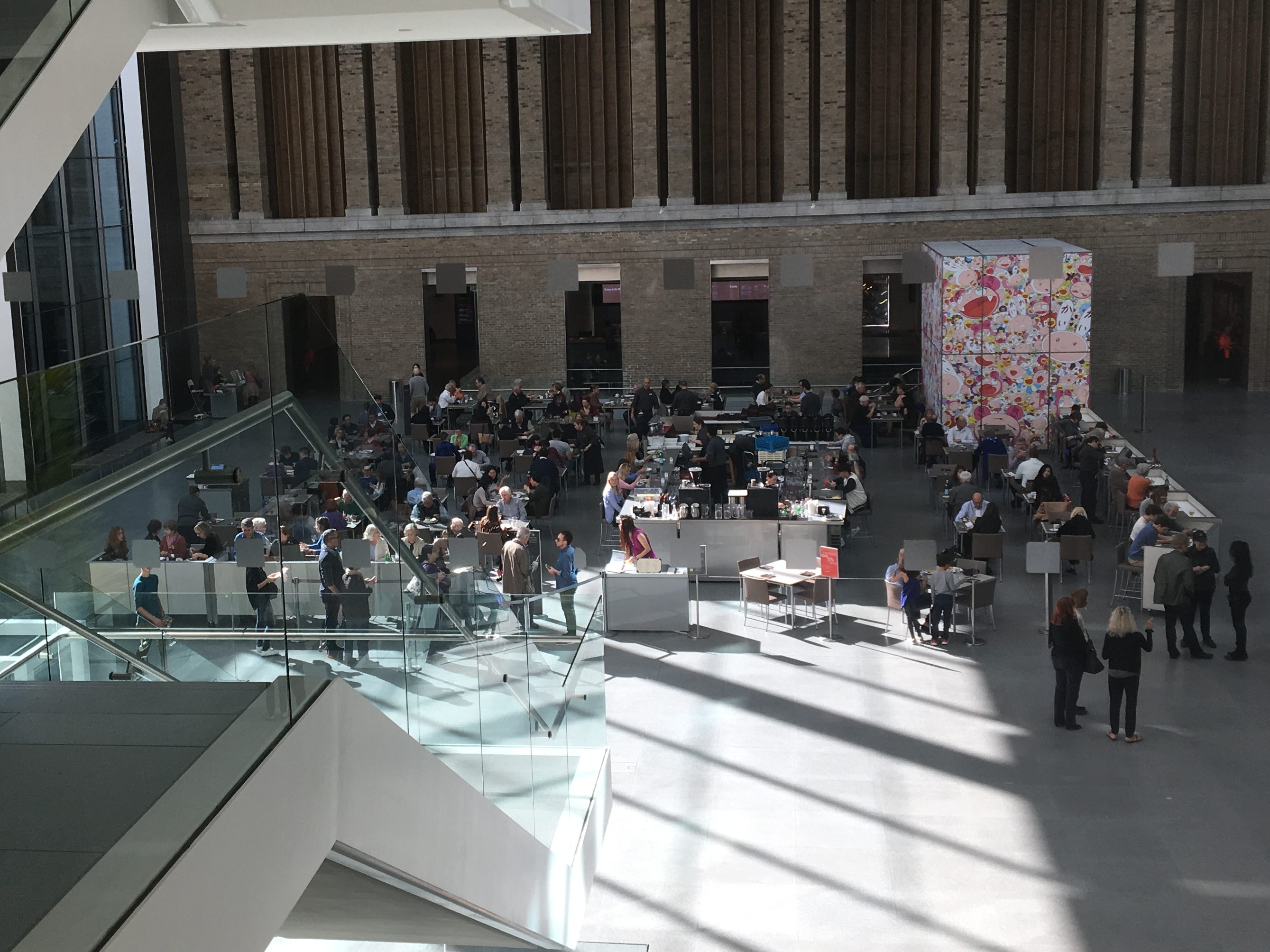
A minimal option for lunch is a kind of snack bar with sixties-themed chairs and tables along a wide open hall with lots of foot traffic. It’s a good place for a coffee break (or beer or wine) and for people-watching. If you brought your own lunch this is a good choice. It’s also a good landmark for a rendezvous-vous.
Your third choice is a real restaurant in a large indoor courtyard. It is more elegant and the food is good; I found the service to be friendly but leisurely, and the space is rather echoing, so not entirely relaxing for me.
But now back to the art exhibits.
Each room
If you did the math (150 rooms / (26 visits * 5 hours/visit)), you’ll see that it takes me on average almost an hour to see a single room. I’m very, very slow, so much so that I visit by myself because everyone else has done five rooms while I’m still in the first one, and they’re annoyed at me. What am I doing in there?
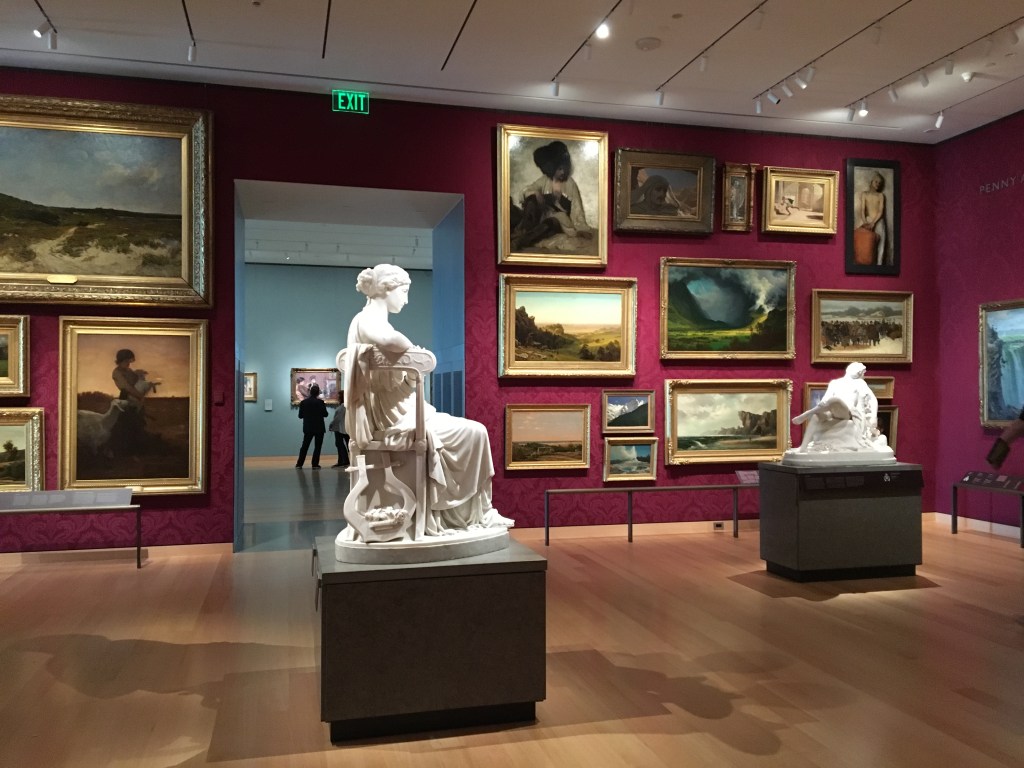
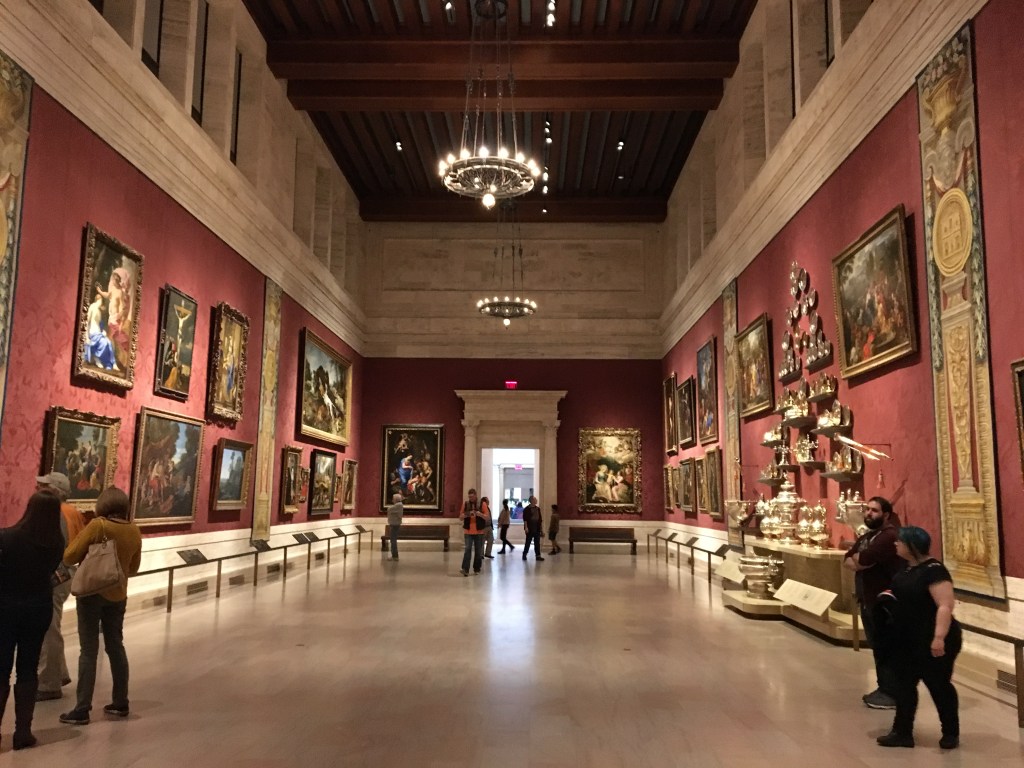
Well, I stand and look thoroughly at every piece before moving to the next one. I skip none, because I don’t want to dismiss at first glance some work that a human put their soul into. But there is more to say about this part of the experience. It took me a long time to appreciate that each room in the MFA has its own personality embracing its contents. For example, this one below is high density and romantic, with warm walls and floor. In the background is a room with cooler lighting, lower density and a more contemplative mood.
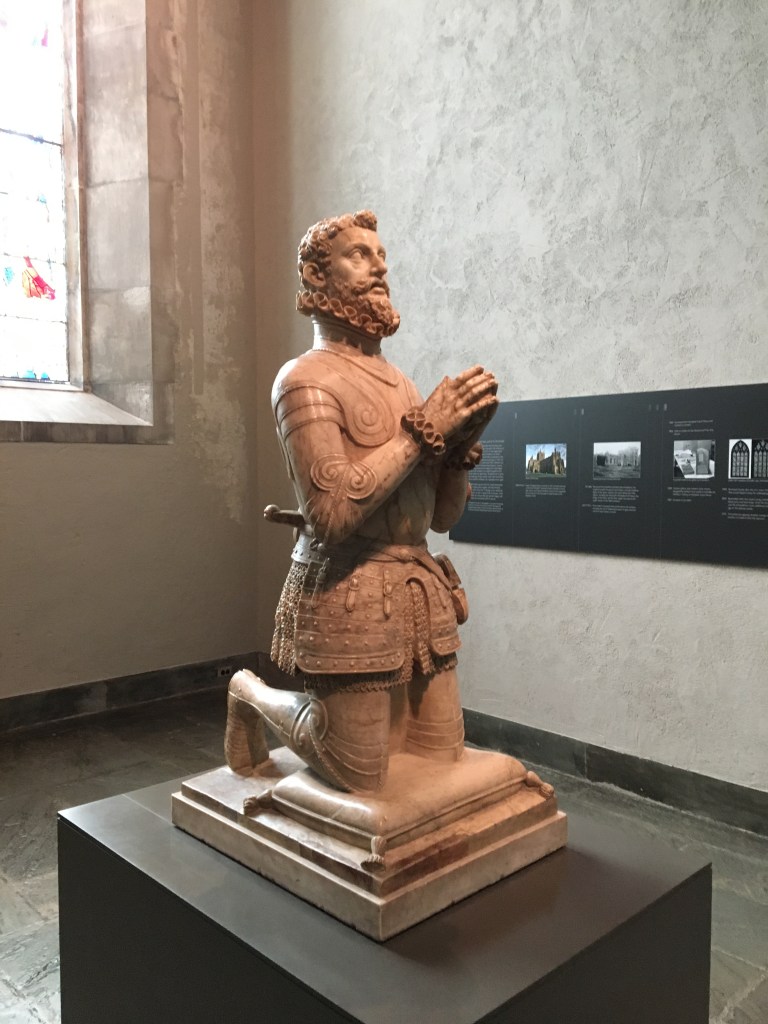
Contrast that with the almost hidden chapel below, literally moved from its original site and built into the museum. The sculpture in the foreground dominates the mood and the space.
The room below is nothing short of majestic, yet because it links two regions of the complex, most people just rip through here without looking. I spent over an hour there.
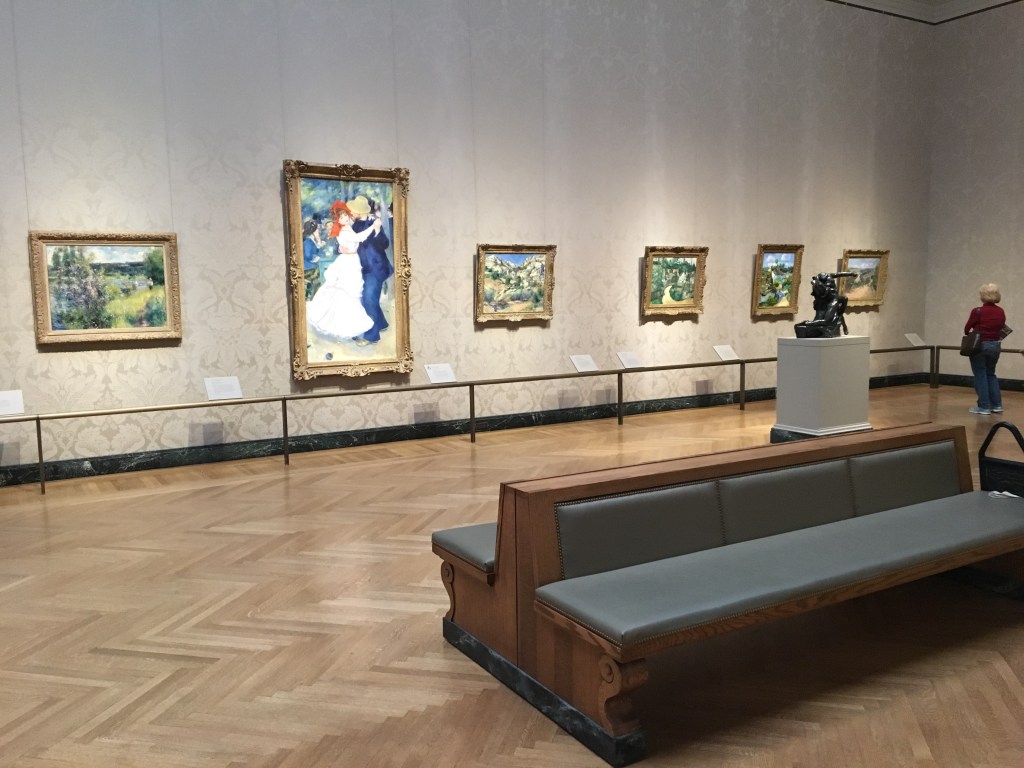
And of course the Impressionist galleries are among the finest anywhere. Boston collectors were among the first to embrace this then-controversial style, so the MFA is well endowed. There is even a room for New England Impressionists (not shown).
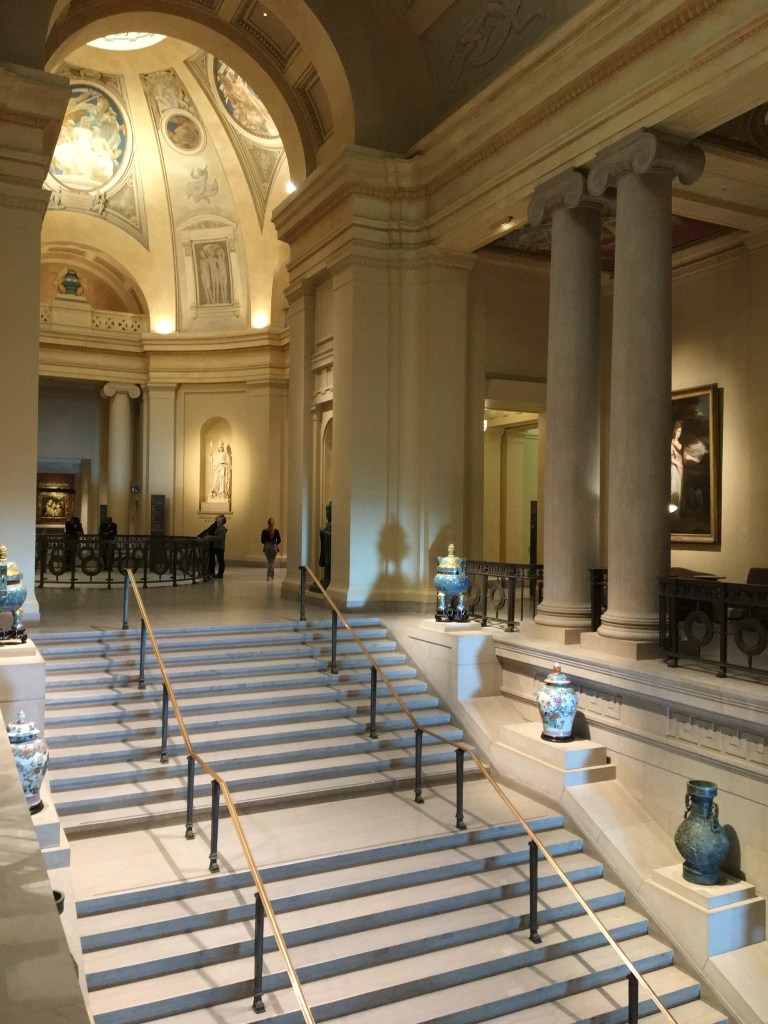
Art and architecture are thoroughly integrated here across cultures and centuries. Somehow there is harmony among the Ionic columns, the Chinese urns, and the many ceiling murals by John Singer Sargent. When you slow down to simply be in a space, each one is a feast for the senses and the mind.
Each piece
When I walk up to any work of art, I try to take time to notice everything. As an example, consider the painting below, Boston Harbor by Fitz Henry Lane. There is no single distance from which you can completely appreciate this painting. From perhaps five feet away, what stands out are the harmonious violet tones and the way the ships embrace the enormous tranquil sunset. Adding emphasis, the masts of the central small boat point to the sun, which is surrounded by an almost rainbow-like atmosphere. Coming close up, one is struck by the lush details everywhere one looks: the varied ripples on the water, the extraordinarily complex and accurate rigging, the details of the far shore. Even the dim moored vessel in the lower right is delineated with loving care. In addition, there is something not seen; there is no evidence of the brush strokes required to make such a painting. That’s impressive, too. One last word on close viewing; the guards get nervous. I find that clasping my hands behind my back tends to put them more at ease. On no account should you use your hand to point out some detail to your companion. Many works have proximity alarms that will embarrass you if you peer too closely. I like to tempt the alarm.
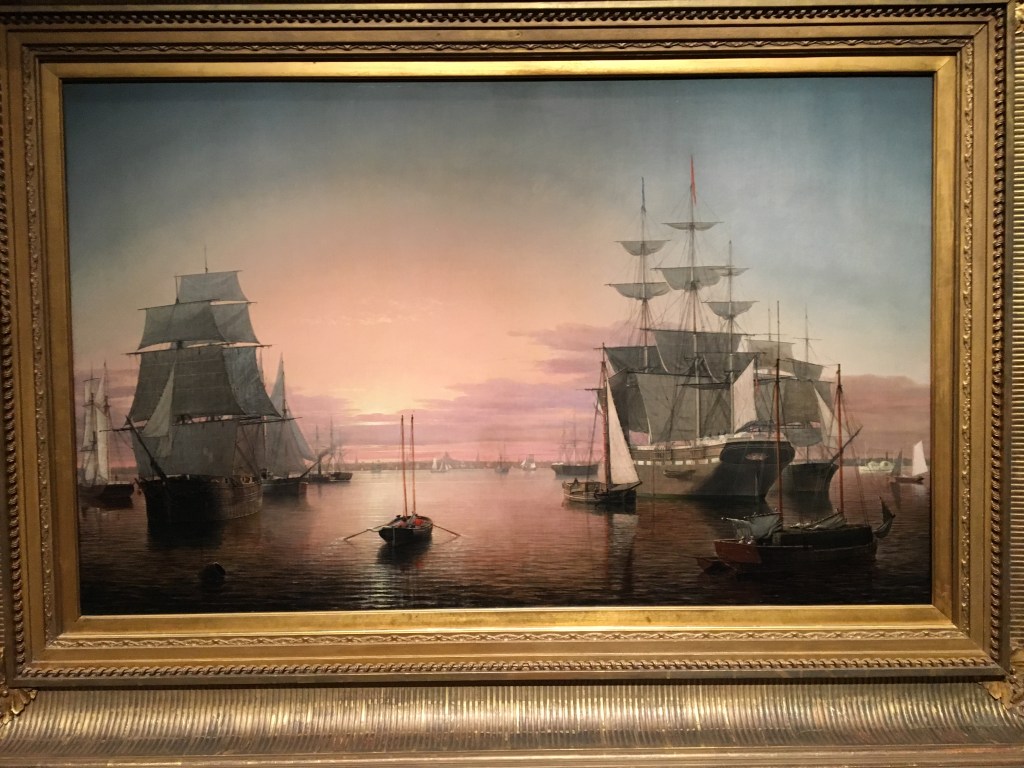
Yet, there is more to see above and more to learn. Consider how the frame of the painting harmonizes with the work itself. Most paintings have been “married” to their carefully crafted frames for ages. In this case, the golden-bronze tones and regular grooves and stipples of the frame echo the tone, texture, and even the mood of the water. The frame of a painting is also a work of art. Don’t miss it.
And there is yet more—each work has its explanatory card by its side. Here we will learn the title if any, the artist, materials, date, and some known history of the work itself. I find it tempting to read the card first, but I’d rather get my initial impressions from the art itself, then learn about its context. I always read the card. If you’re going to be slow, don’t skimp.
One last bit of advice. If you, Gentle Reader, are of a certain age, as am I, all of this gazing from different distances may be challenging to the eyes. Bifocals, reading glasses, or progressive lenses are each designed to mitigate the problem, but they all share one flaw; one’s close focusing is restricted to the lower half of the visual field. So I find myself having to approach each artwork with my nose progressively raised into the air, as if I were snootily disdaining the work itself. If a painting is mounted high up on the wall, even this tactic becomes anatomically challenging. The solution is to raise one’s spectacles manually via a hand to the temple. This is both more comfortable and it looks very erudite.
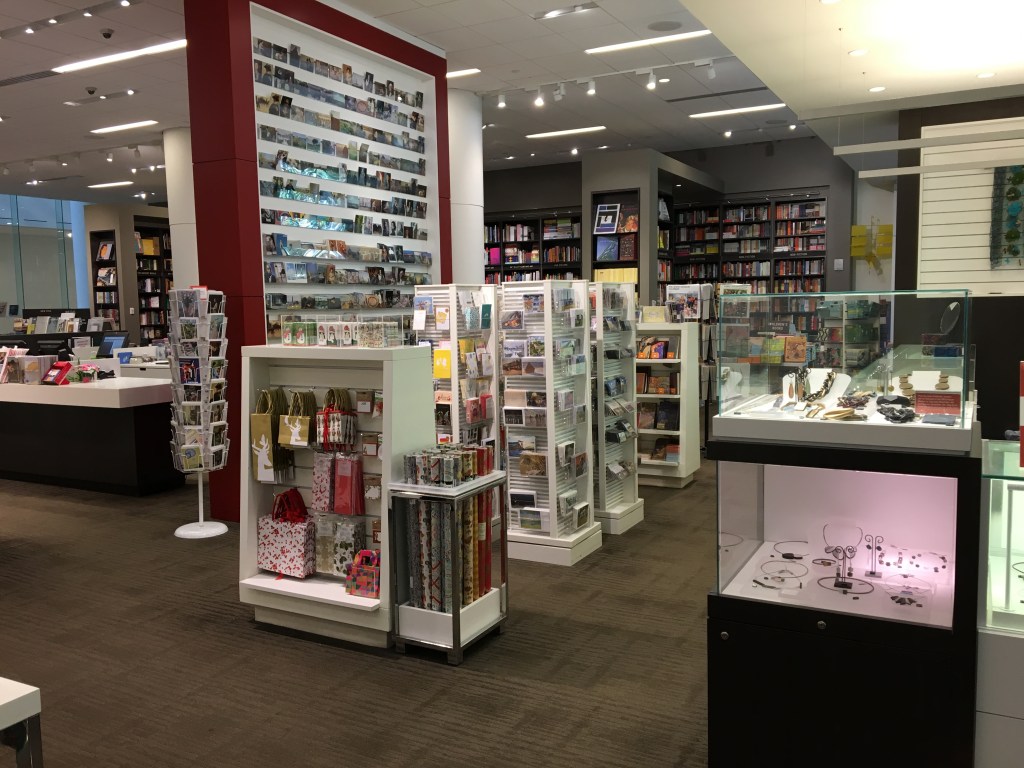
The museum shop
Normally, I avoid museum shops; I expect them to be over-crowded and over-filled with over-priced tchotchkes. The MFA shop has its quota of those, but it also has other types of merchandise to recommend it. First, the vast collection of books on art and artists is a treasure vault. No matter what your interest, they have a book for that, and maybe a whole shelf. Second, a neighbor of mine who is always elegantly dressed is happy to reveal that she buys much if not most of her clothing here.
Favorites
To end my tour, I’d like to share some of my all-time favorite works. If you visit the MFA, you might consider this section as an Easter egg hunt.
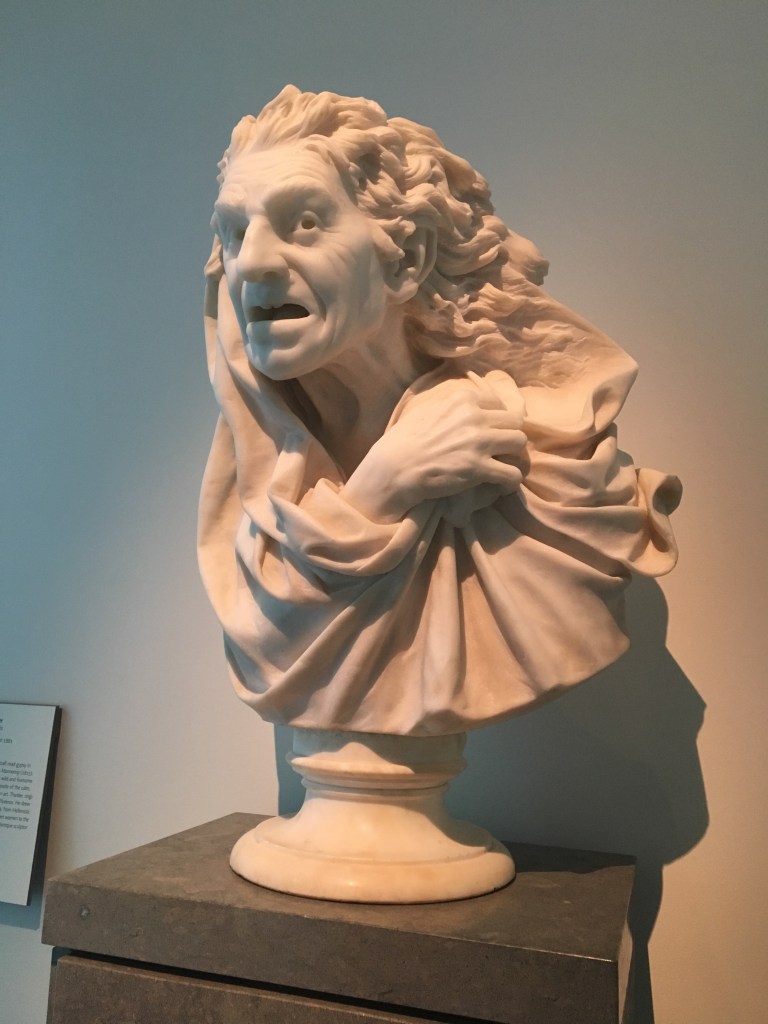
Coming around a corner, you are face to face with Meg Merrilies (a fictional fortune teller), by Edward R. Thaxter.
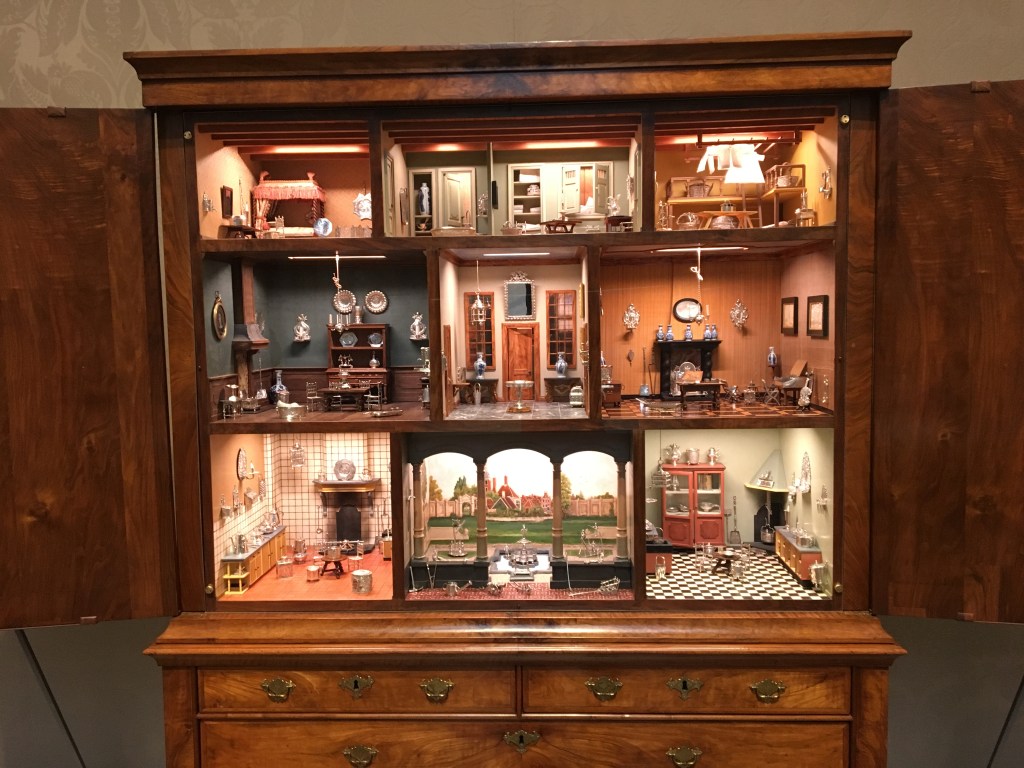
This exquisite Dutch doll’s house is also a favorite among children and my wife Bridget. It’s so tempting that the museum had to fit it with a glass front.
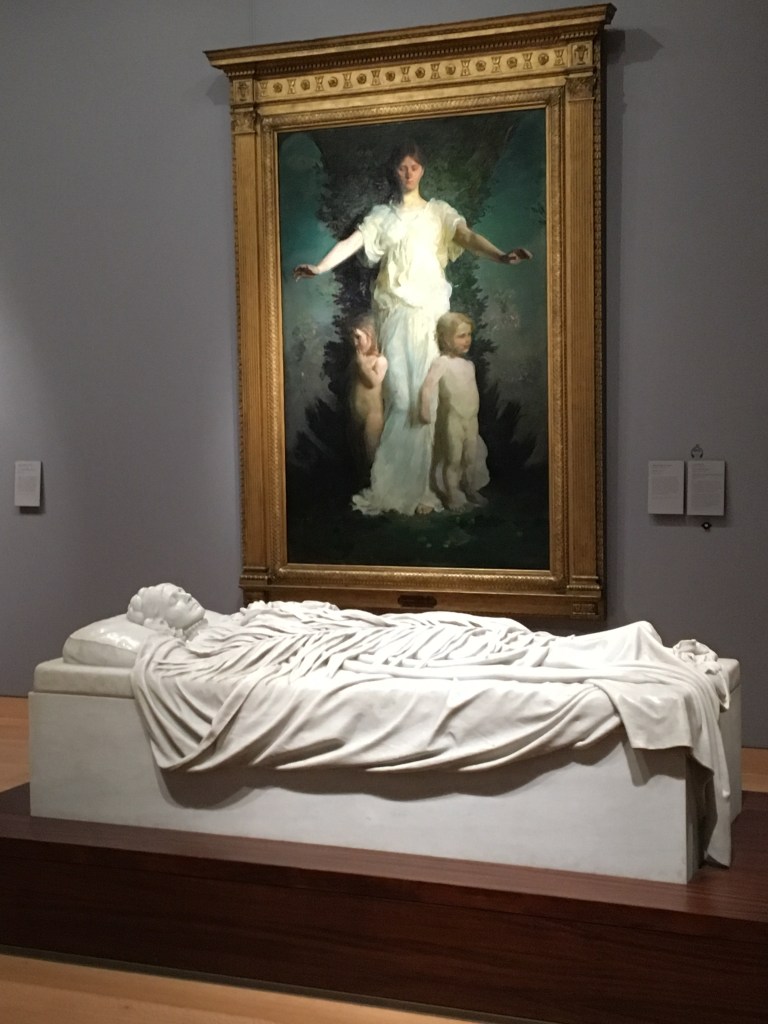
Here is Caritas, (Charity) by Abbott Handerson Thayer, juxtaposed above the Tomb Effigy of Elizabeth Boott Duveneck, sculpted by her grieving husband Frank Duveneck.
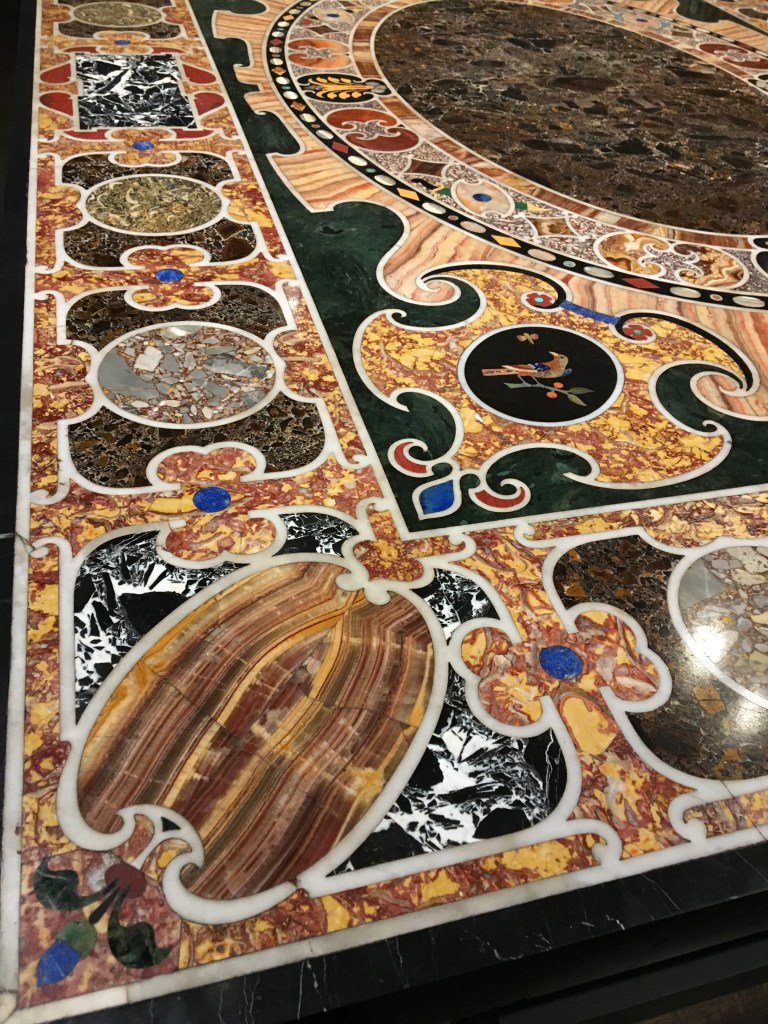
Below is an inlaid marble table top in the Kunstkammer gallery. Having an interest in geology, I could stare at this for hours.
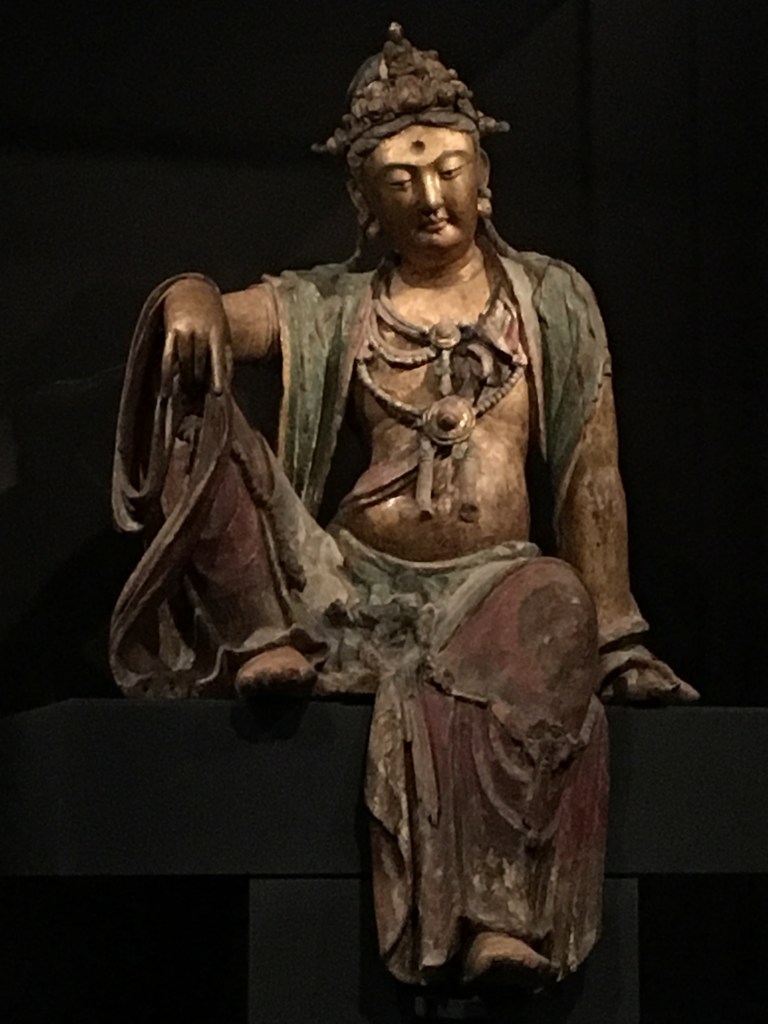
Lastly, my most favorite work of all. Guanyin, bodhisattva of compassion, in Water Moon pose. We are to imagine Guanyin staring at the reflection of the moon in the waters of a pond. If the waters are still, then the moon will also be still. The Buddhist message is that we will know the beauty of the world if the mind is still. In some times and places, Guanyin is represented as female, and in others as male. On each trip to the MFA, I make time to sit in the dim gallery with Guanyin and to contemplate the moon in the waters.

 If I knew what I was doing …