
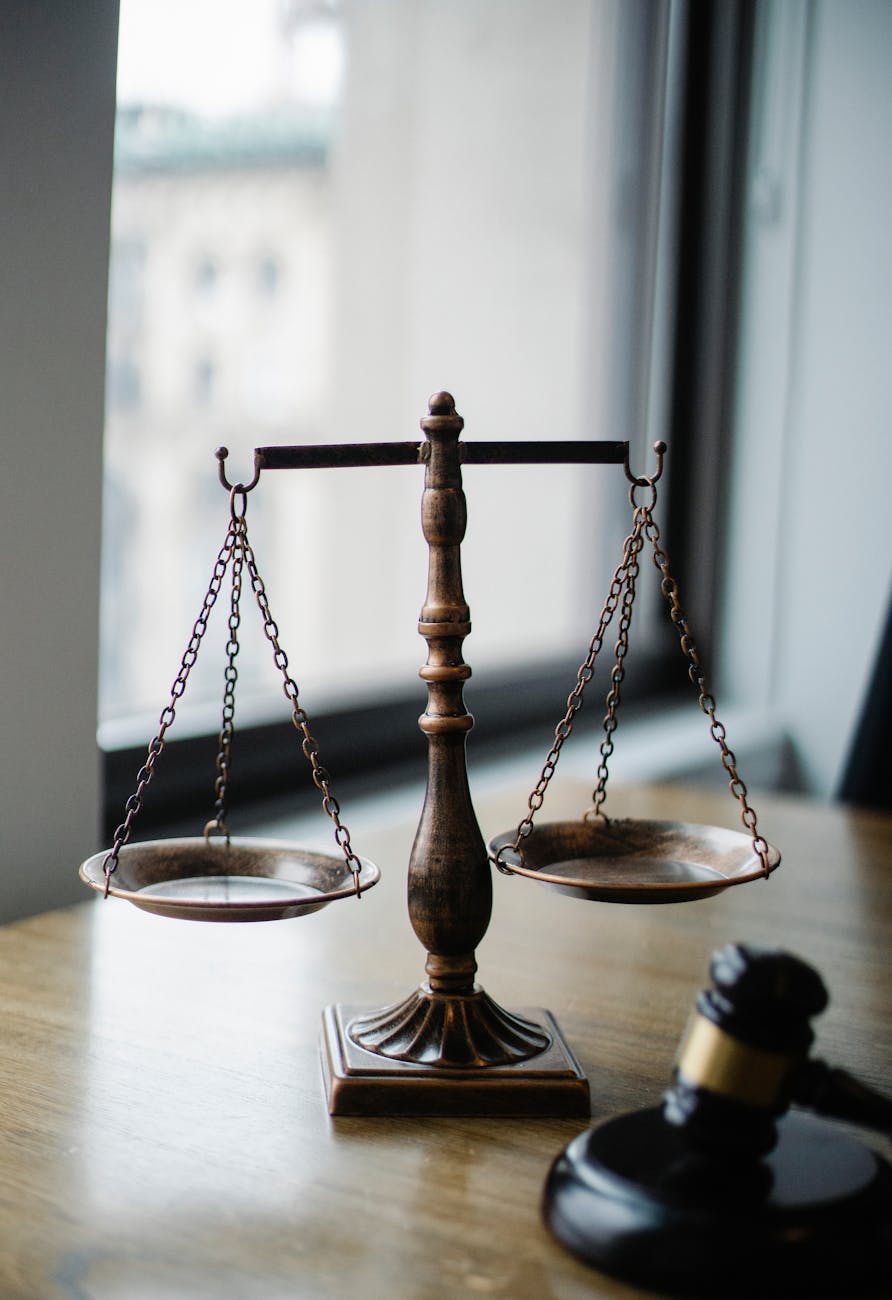
In 2010, I served on a Middlesex County grand jury of Massachusetts. It was a fascinating experience. This is not like a trial jury, with which you may be familiar. In Massachusetts, every felony indictment must come from a grand jury, so during our three month term we heard over 700 different felony cases and returned around 1200 indictments for trial. I learned a great deal about felonies in Massachusetts and quite a bit about our justice system as well. The details of this can never be shared, because jurors may never discuss cases or jury proceedings, a restriction that protects them as well as everyone else involved. But a lot of the general knowledge I learned is already publicly available, just not in one place or as one person’s experience. I collect it for you here, Gentle Reader, not only because it is so interesting, but because I think we should all have more familiarity with the people and processes composing the justice system that provides our security every day.
3 months???
There were about 80 of us and we were all deer in the headlights of the justice machine. You’ve probably been called up for trial jury duty. It’s scary, but surprisingly boring. The defendants almost always settle at this very last minute, so you’re just there as a threat, like you’re a bunch of guys lined up with baseball bats in case they don’t make a deal. Thanks for serving. Grand jury is different—it’s a job interview. The system needs 23 jurors plus a few spares to go to work for three months. It’s gonna happen. The only question is, will it suck you in? You fill out the questionnaire and you get interviewed by a judge. They decide if you’re in or out. You’re the only person caring for your disabled mother at home? Out. Retired? In. Barely able to pay bills and the people you work for don’t pay you after the mandatory 3 days? Out. You have a white collar job at a big firm that will pay you for all jury duty? That’s me! I’m in. It’s not exactly a jury of the peers of the people we indicted. We were secure citizens, but most of us didn’t start out with an understanding of why someone might carry a pillowcase through a parking lot at night, taking everything sellable out of every car that was unlocked, even the change for the parking meters. By the end, we understood.
it takes most of a morning to fill up a waiting room with us, anxiously silent, worrying or complaining aloud, or making friends. All wondering if this will be okay. One guy in a suit decides to be huffy. He’s some lawyer who’s too important for this. He works himself up and insists on a second interview. He rehearses his spiel to us. Jerk. We don’t see him again. I didn’t want to work with him anyway, but I hope the judge penalized him good. In the end, we are 23 plus a few alternates and we get briefed. When and where to show up for work. And off we go to explain to our families and employers that things will be very different for the next three months.
Learning the ropes
We all commute to the courthouse about three days a week and we work until mid-afternoons. Mostly in Burlington, but sometimes in Lowell or Natick. Sorry, no Greek pillars or marble steps. The courthouses look like any other suburban commercial building, all glass and concrete, except for the metal detectors and the secure prisoner delivery level at the top floor of the parking garage. This is when I was weaned of the habit of carrying a Swiss Army knife. We meet “our” DA, the district attorney who handles us the whole time: our case schedules, our questions, our briefings on the law. He’s been doing it for years and we are grateful to him because he’s really good at this. We learn our job on the job.
The grand jury system was originally created to protect citizens from unjustified prosecution. The grand jury decides only whether or not there is enough evidence to prosecute a person for an alleged crime. Our standard is not, “beyond a reasonable doubt”, it is “probable cause”: would a reasonably intelligent person conclude from the evidence shown that it is likely that the crime named was committed by the person named. If so, we return an indictment for that crime and a trial may proceed. In each case, we hear only the prosecutor’s side of the story, not the defense. We’re only deciding whether or not they have enough for a trial. We indicted over 95% of the cases we heard. That sounds like a rubber stamp, but I think it’s evidence that the system is working. The DA’s aren’t going to waste their time bringing us cases we might reject. We were more likely to see a case where the DA requested our subpoena power to dig for more testimony, but then they declined to bring an indictment to us if they thought the case would fail at trial. I learned to have a lot of respect for the DA’s for many reasons.
I’ll describe in sanitized fashion one case where we did decline to indict. A shooting occurred in a parking lot and two fleeing suspects were arrested nearby. One had possession of the weapon used. We indicted all that. The police had locked down the parking lot and interviewed everyone within the perimeter. After it was empty another firearm was found there along the route taken by the suspects. We declined to associate that weapon with the other suspect, which surprised the prosecution. We reasoned that any other person caught up by chance in the lockdown might want to get rid of their weapon before being interviewed by the police. A random drug dealer, perhaps. I think we did right, but it’s not clear cut.
Our DA eased us into our job by starting with the least challenging cases in the first weeks. Slam-dunk drug dealer cases, mostly. Simple armed robberies and assaults. A bank robbery or two. There’s no judge, defense, or members of the public present. The DA would take testimony from a victim, a witness, and/or the arresting officer, we would ask any questions, then everyone left and we’d deliberate and decide. Sign the papers and hand them to the DA. We learned the drill, the lingo, and the law. After a while, we were skilled. One time we even caught an omission; we asked, “was the arrest made within 100 feet of a park or 1000 feet of a school?” Frequently, they tack that on to “possession with intent to distribute” because the penalty is higher, but it wasn’t mentioned in this case. It’s hard to avoid such zones in urban areas, so we asked. Flustered, the DA checked a map. They found a school. “Yes, thank you, grand jury.” We waited smugly while they printed up a revised indictment. A rare slip-up.
They eased us into the harder cases over time. We’d get preparatory briefings by a DA or an expert. Exactly what is “breaking and entering”? “Assault with a deadly weapon”? “Kidnapping”? (A lot broader than you’d think—don’t withhold your partner’s cell phone or hold the door shut so they can’t leave.) I learned stuff I don’t want to have to know. What is “affirmative consent” and what is “penetration”? What injuries occur to babies who fall vs. those who are hit or shaken? Fortunately, by the time we heard these very upsetting cases, we had bonded well as a group, so we functioned as our own support network. We dealt with it in the room, since we couldn’t talk anywhere else. Our DA was also mindful of these issues and the rough cases were always the last case of a short day. Sometimes I cried on my way home. But these sorts of cases were uncommon, which is what you’d expect. Over all there was a wide variety of crimes and many of them were quite interesting. I can’t go into details of individual cases, but I’ll summarize the types of crimes we heard.
The crimes
One of the DA’s told us that, after good citizens like us have all gone to bed, there is a whole other world that takes over our neighborhoods, with its own inhabitants and its own rules and industries. Driving in daylight to the library or to the grocery store, she’d pass locations of crimes she’d prosecuted: a knifing on this corner, two people shot in that parking lot when a drug deal went bad, several rapes and assaults in that apartment building, etc. Most of us never intersect that world, but the justice system does. The system I was now part of. Here is a glimpse of that world.
Drug dealing. By far our most common indictment was for “possession with intent to distribute”, mostly cocaine and heroin at that time (2010) and that place (eastern Massachusetts). The amounts ranged from a dozen individual units in tied-off corners of baggies up to full cereal cartons shipped in from abroad. Breakfast of champions. A lot of those indicted were repeat offenders; they’d been in prison for dealing before, some of them more than once. We noticed how common this was and we remarked to “our” DA that this looked more like a revolving door than a solution; sort of like an endless children’s game of “cops and robbers”. After prison, one guy was busted again by the same undercover cop. (You would never guess that this slinking, strung-out looking guy was a cop.) The DA said that dealing is a career. Most of these guys (they are mostly guys) are dealing any time they’re not in prison. They usually got started because they were addicted themselves and this career helps finance their habit. “Is there a solution?” He said that as long as people want drugs, a system will keep arising to supply them, no matter how many dealers we lock up. “Don’t they ever quit?” Most of them eventually age out of the system. Somewhere in their fifties, many of them decide they just don’t want to do this any more. Hah—they retire!
Most of these cases came with an indictment for illegal possession of a firearm. Dealers are usually armed with a gun. Their customers want the merchandise very badly and they don’t always have the money to buy it. The dealer wants to deter any ideas of theft. After all, the dealer can’t just call the police and say, “my customer, X, just stole my heroin. Could you bust him and recover my merchandise for me?” And if the dealer has a prison record, they can’t legally get a gun, so it’s “illegal possession”. Unfortunately it is easy for them to get a gun because a whole infrastructure exists to serve this large black market; in Massachusetts, with its tight gun laws, most of these guns come from out of state.
Dealers also hide their drugs in elaborate ways and only carry small amounts at one time. This deters theft and limits the severity of the charge if they are arrested. In terms of hiding places, there is a sophisticated little industry that makes secret caches in a car, which pop open if you press some special combination of buttons on the dashboard. With luck the cops may not find it. But dealing creates all sorts of evidence, from digital scales covered in suspicious powders, to loads of baggies with missing corners, called “diapers”, to lots of purchases of baby laxative powder, which is used to dilute the drug to increase profit.
This is a very robust industry that, in a weird sense, is part of our society and also provides plenty of stable work for the whole justice system, from police, to lawyers, to prisons. That’s not to say that the justice system is complicit in any way, nor does it suggest that we should reduce our expenditures because they aren’t solving the problem. But clearly something more or different is needed if we want an improvement. Our “war on drugs” has been going on for five decades and we’re not winning. Countries that have successfully reduced their drug problem, such as Sweden, spend a lot on reducing demand for drugs, as well as on suppressing the supply. A good deal of that demand reduction involves systems that improve the quality of life of the most disadvantaged among them.
Theft of all kinds. If I lump all of these together it becomes a big part of our work. But it spans from the aforementioned desperate junkie with a pillowcase stealing from every car in a parking lot, through town officials embezzling over the years, to bank robbers, and on up to Medicaid fraud by a large network of private clinics. This last example held our record for most days of testimony, as well as requiring us to be recalled five times over the next six months to hear even more testimony, and at the time that we finally signed the indictments, they built us a ten foot wall of boxes of documents they had gathered in support of their case. That whole multi-site company was built on fraud.
Because our jury only considered felonies, we only saw minor thefts by repeat offenders. These cases were sad because the common theme was that these people needed money for drugs right now. And the basic problem with deterrence is that the would-be criminal has to be smart enough to realize that they are being deterred. Consider the two guys who got their drug money by donning ski masks and carrying a baseball bat to rob a convenience store where one of them had previously worked. The leader with the bat wore shorts revealing a unique tattoo to the security camera. It was also recognized by the clerk, who sent the police to the former employee’s address on file (his mother’s house, of course). The two were apprehended while using the drugs they had just bought. My sympathies are strongest for the sidekick, who just went along with his buddy’s bright ideas.
There’s a lot more bank robberies than you would think, which is sad because it almost never works. The press doesn’t publicize them, perhaps to keep people from getting the idea that it’s easy. Oh, sure, it is easy to get the money from the teller. Tellers are trained to just give out the money; it’s not worth risking anybody getting hurt. The money is probably packed and ready beforehand, maybe complete with dye pack and radio beacon. But the chase starts the moment the teller sees the note and triggers a silent alarm. The police are on their way before the robber gets the money. Let’s see; one robber stumbled over the cops on his way out of the bank. One was nabbed coming out of the subway station where he had bolted, hoping to get a train that never came—yes, they can stop the trains. And if the robber eludes all that, there’s still webcams covering of almost every inch of the streets these days. (Remember how the Boston Marathon bombers were traced on multiple cameras?) So the getaway vehicle they parked blocks away is often caught on camera. Even the serial robber who operated all over southern New England had their vehicle identified at the casino they always went to after each robbery. Then the cops showed up at her house where she still had some of the money. Some crimes pay, but not bank robbery.
What does it say about me that I found the fraud cases to be the most fascinating ones? I guess it’s because fraud is a complex deception on one side and hidden attempts on the other side to detect and unravel the deception. I wish I could describe some of them fully, but that’s out of bounds. All I can do is give you snippets where you can hopefully get a flavor for the elaborate ingenuity of a few people. I’ll write about two cases. One was a college student who cleverly transferred into an Ivy League school by misrepresenting themself as already being in a different Ivy League school. This involved a false transcript and false references. Then they finally got caught in their new college by plagiarizing a paper where the professor happened to recognize the prior work. In our deliberations, we all agreed that the student had shown such cleverness and industry that they could have risen up just about as well if they had been honest. What a shame.
My all time favorite case was a Byzantine real estate scam. The idea was to intercept the full payment when a house is sold. Multiple attempts were made. Never you mind how. (They’ve probably plugged that loophole by now.) Let’s just say that an author could make a riveting story out of this. It would of course involve the FBI putting a GPS tracker on the suspect’s car at night, in their own driveway. The suspect would always access public Wi-Fi at a national chain of stores where every single franchise uses the same gateway address, so that the FBI could not even identify which state the suspect was in. The suspect would pay fees using anonymous money orders purchased with cash at multiple grocery stores. But the store in question could identify the transaction time and checkout lane and show the security video to the FBI. Then the parking lot video would show the same person getting into their car, but not the license plate. A dealer could identify the model and year of the car. The state could give them a list of who owns that make, model, year, and color. Check them all out. Hence the GPS tracker on Suspect #1’s car. On the next attempt, get the real estate lawyers to play along and lure the suspect to their high-rise office in Boston to take delivery of the documents. Cuff ‘em! Wow! But again, we jurors wondered why somebody so smart and industrious would choose “a life of crime”. Maybe a lot of these folks were less motivated by the gain than by the game.
Assault with a deadly weapon. Yeah, people get angry and fight a lot. You’d be surprised what qualifies as a deadly weapon, though. In elementary school, I once kicked a fellow student in the butt with my boot and hurt him really bad. I was really sorry, too. I had no idea I could do so much damage that way. That was a felony, “assault with a deadly weapon, to wit, shod foot”. ”Shod foot” is a deadly weapon, but not “bare foot”, unless the kicker is trained in martial arts. A boxer’s fists also qualify, but not my fists. The most unusual “deadly weapon” we encountered was a sidewalk. A guy knocked down his neighbor and sat astride him, pounding his head into the sidewalk. That’s clearly “ADW, to wit, concrete sidewalk”. We indicted him, but at lunch we tried to come up with even more unlikely deadly weapons. Strangle them with a pool noodle?
A knife is obviously a deadly weapon, but you might be surprised at how ineffective they can be in a fight. We had one witness who won the fight partly because he didn’t realize his opponent had a knife; he was so full of adrenaline, he just thought he was being punched all over, not carved up. Only after his opponent fled did he keel over and have to be transfused in the ambulance. He received an unheard-of number of stitches. Knives on TV seem to have a lot more stopping power and be less messy.
Rape. I was thinking of writing the legal term, “sexual assault” in deference to your sensitivities, Gentle Reader, but the ugly word describes the ugly deed. All of these cases were heartbreaking, but many of them were also in the gray zone. It’s not difficult to indict when step-uncle gropes under-age step-niece, although we the jury will be upset for days after we hear the case. But young people should and will party freely and sometimes they wind up in bed and “affirmative consent” may not have occurred. Was she drugged? There are times when, “he said, she said” has to be decided somehow, and it falls on the shoulders of the jury. It’s cases like these that led me to conclude that a jury of twelve or twenty three average citizens is the best way to decide questions of individual justice. These jury members are just average people; they are also the salt of the earth. The grandmother with her knitting, who says, “it’s just not right”. The youngest man, who reminds us, “he dragged her into the next room”. The quiet librarian, who says, “I’d like to hear a clarification on this definition from our DA before we proceed”. For a victim of rape, the justice system has its episodes of pain and humiliation, but your DA is a knight in shining armor and the jury truly sees you and fully feels your pain. I know.
Murder. Thankfully rare. Nothing good or entertaining here. The babies are the very hardest of all. We had four, I think. Rest in peace, little ones.
The good guys & gals
I’d never met a DA before, but the ones I met take justice as a mission, not a job. They weren’t biased in favor of prosecuting, but they were diligent at finding evidence that would make the facts clear. I felt that they seemed to be constantly consulting an inner moral and legal compass before they chose what to say or do. I think it’s emotionally hard to face the iniquities of our species every day and remain balanced and focused. I admire them as a group.
Most of all, I learned to admire the many police officers whose testimonies we heard. Recall that most drug dealers are armed to deter theft. How would you feel about arresting them? I remember a uniformed officer testifying about chasing an armed suspect on foot as they fled a shooting. The officer eventually tackled the suspect and kept them down until their partner arrived a moment later. At the conclusion of any witness testimony, we were always asked, “does the grand jury have any questions for this witness?” One of our members blurted out, “weren’t you scared?” “Terrified. Absolutely terrified.” The two DA’s present and the officer’s partner all nodded and made noises of assent. This is not the movies; it’s not cops and robbers. Every police officer does their job every day knowing that, at any moment, they may be risking their one and only life for our safety. Being human, their judgment isn’t entirely perfect, but their daily commitment deserves our respect and our thanks. I wish we could make their jobs safer, not only for their own sakes, but because it would doubtless make it easier for them to apply their best judgment in the riskiest of situations.
Driving home from court, I thought of my own few interactions with police, the minor traffic infractions that might happen once in a decade or so: failure to come to a full stop, speeding, etc. And I thought that the least a citizen could do to show their respect for these brave people was not to lie about such small things. “Yes ma’am, I had the cruise control set on 80.” “Yes sir, I went through the red light and it felt stupid and dangerous.” I hope you’ll agree with me that they’ve earned the truth from us.
Wistful observations
A three month stint on a grand jury doesn’t qualify me to diagnose our justice system or to propose cures. But the education left me wishing that some things could be improved. I wish that so many people weren’t trapped in lives that had so little hope that using drugs seemed like the best choice available to them. I wish that young women could revel and party freely, the way I did, without the looming threat of getting raped. I wish that parents who couldn’t stand another minute of their baby’s crying could go out in the street with their infant and receive help and emotional support from kindly, experienced strangers. And I wish that our police could be made safe from grievous harm, so that the will to justice and protection that brought them into their service could always guide their actions, instead of panic. And while I’m on the subject, I wish that every person I indicted could find their way to a life of compassion for others.
Our justice system is imperfect, but it has qualities of the sublime. It’s worth improving..

 If I knew what I was doing …